


Metal and Pipe Repairs
Fill cracks, holes, and damaged joints.
Couldn't load pickup availability

Five classic festive designs for relaxing holiday DIY and gorgeous home decor.

🛋️ Boring Cold Winter Days
Staying inside during long dark evenings can feel lonely and leave you with no engaging activities to pass the time. This heartwarming craft project keeps your hands wonderfully active while filling your quiet hours with fun.

🎨 Easy DIY Pearl Art Steps
Complex craft kits with messy instructions can become far too confusing and frustrate your eyes after just a few minutes. The straightforward symbol match grid allows you to place each shiny bead with absolute confidence and total ease.

✨ Shimmering Raised Pearl Details
Standard flat paper prints look incredibly plain on your walls and fail to capture true holiday warmth. These premium raised round beads create a spectacular three dimensional effect that sparkles beautifully under your room lights.

🏡 Five Classic Festive Designs
Finding unique seasonal styling elements that match your traditional mantel setup can be a very difficult chore. Choose between Santa, a tree, reindeer, wreath, or stocking to elevate your holiday room arrangements instantly.

🎁 Heartwarming Holiday Gift Idea
Searching for a deeply thoughtful present for the avid crafters or young grandchildren in your family can feel exhausting. It serves as a beautiful masterpiece that brings your loved ones together for precious creative memories.
Canvas Base: Soft fabric texture canvas with clear symbols
Bead Quality: Shimmering rounded raised pearl elements
Included Accessories: Easy pick wax pen and sorting tray
Design Selection: Five classic festive theme layout choices
Q: Does the matching golden display frame come inside the package?
A: Yes, each creative kit includes a beautiful matching border frame so you can display your finished piece immediately.
Q: Are the printed guide symbols on the fabric large enough to read easily?
A: Absolutely, the grid characters feature clear contrast printing so you can match the colors without straining your eyes.
Q: Is there a sufficient amount of beads enclosed to complete the painting?
A: Yes, we provide an ample extra supply of every single pearl color tone to ensure you finish your winter project smoothly.
⭐⭐⭐⭐⭐
Margaret T. (CA, USA)
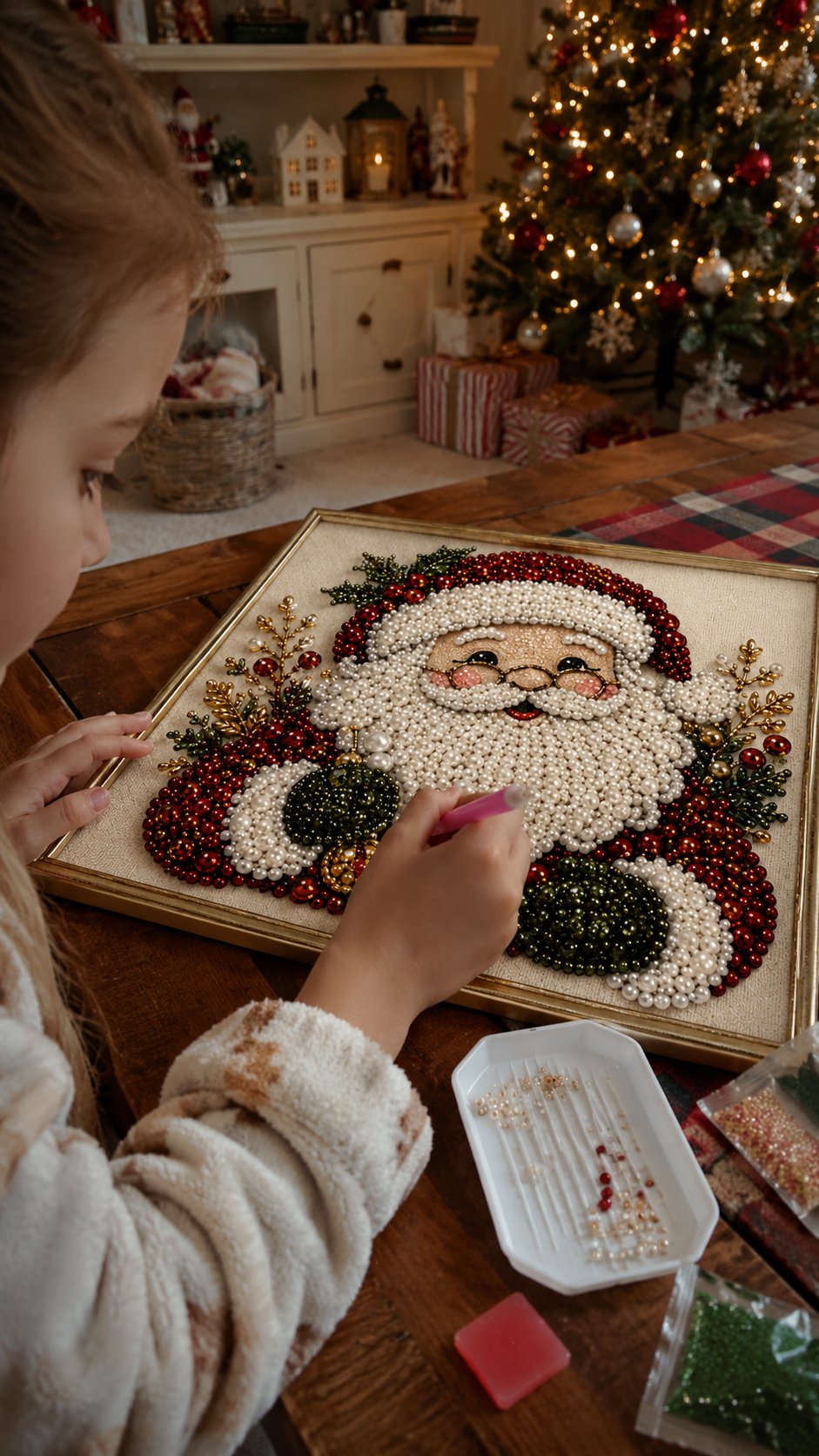
"I spent three lovely afternoons working on this beautiful Santa design right at my kitchen table. My young granddaughter loved helping me place the shiny white pearls on his beard and the pattern is very clear."
⭐⭐⭐⭐⭐
Arthur B. (NSW, Australia)
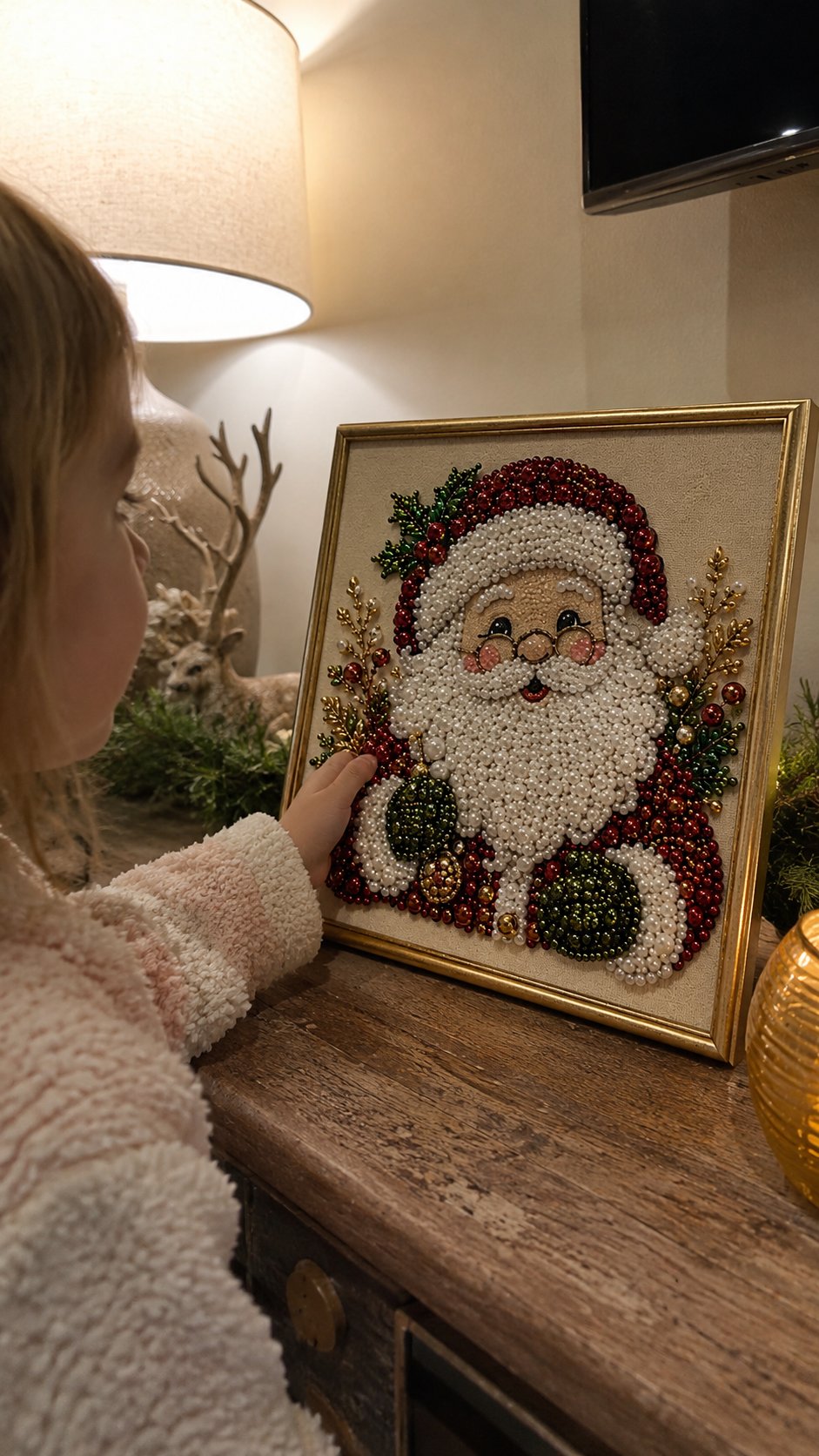
"The completed piece looks absolutely gorgeous sitting on my wooden hallway dresser right next to the lamp light. The raised beads give a wonderful sparkle effect that all my holiday visitors admire."
📦 What’s Included
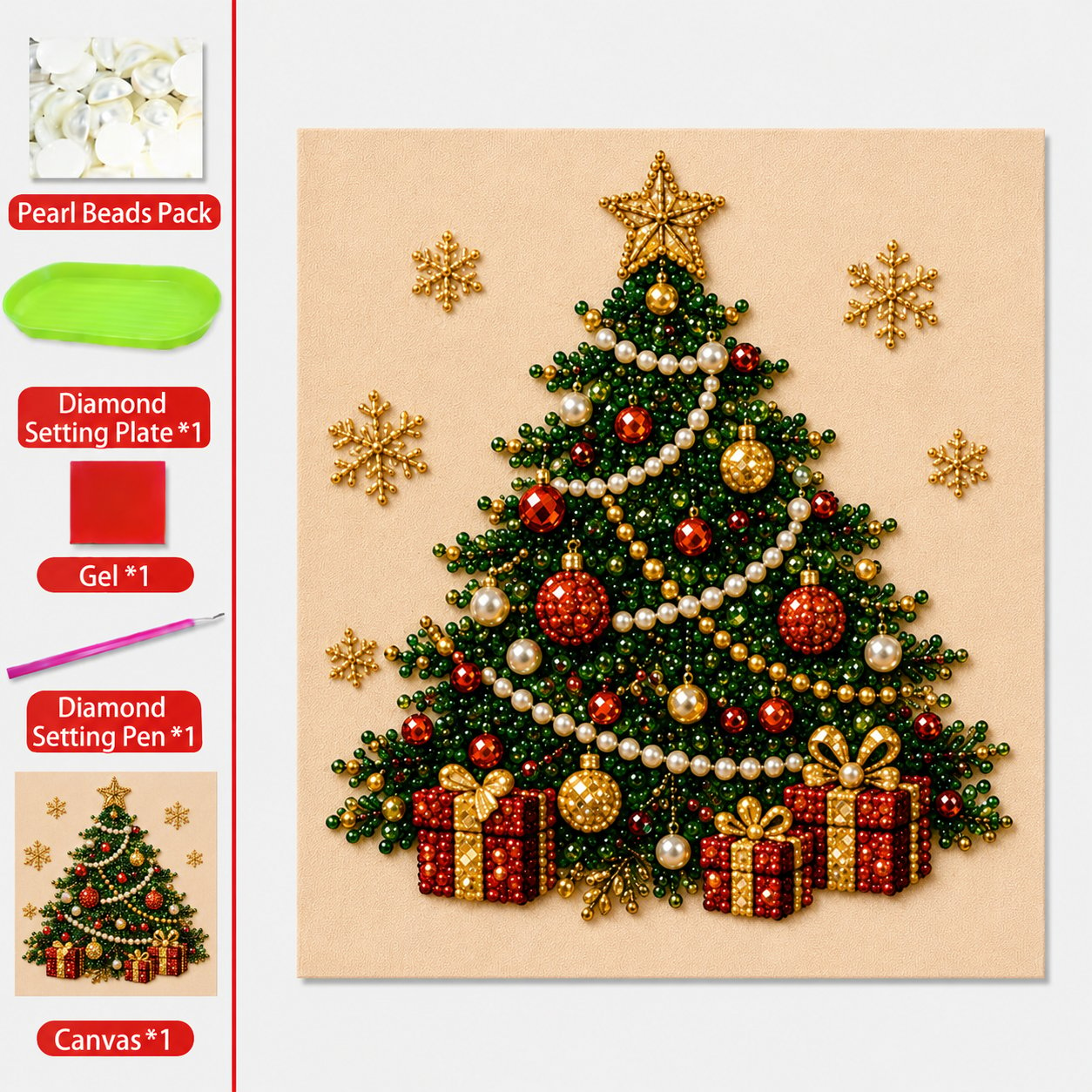
✅ 1 × Pre-printed adhesive canvas
✅ Color-coded pearl bead set
✅ 1 × Placement pen tool
✅ 1 × Wax pad
✅ 1 × Sorting tray
✅ Easy instruction guide
(All materials included—no extra supplies needed!)
Bring the sparkling magic of a handmade holiday tradition into your home before our winter stock disappears entirely.
[Shop Our Christmas Art Kit Now]
Quality products, fair prices, and support that actually cares.
Curated suppliers + in-house QC for consistent quality.
No middlemen. Just great value on every order.
Real people, real help. We reply within 24–48h (Mon–Fri).
Hundreds of 5-star reviews on quality and service.

Heads-up: holidays, customs, or weather may impact delivery timelines.
If your item arrives damaged or not as described, just contact us for a replacement or refund—simple and hassle-free.
Please allow for processing time and consider holidays or unforeseen events that may affect shipping.
Enjoy FREE standard shipping on orders $39.99



Small cracks, leaks, holes, and broken edges rarely stay small. This moldable two-part repair putty presses directly into the damaged area, then cures into a hard, durable patch.
Liquid glue runs. Flat patches struggle on curved pipes and broken corners. This putty kneads by hand so you can push it into uneven cracks, holes, joints, and chipped edges.
Blend equal parts until the color and texture are uniform.
Fill the crack instead of only coating the surface.
Build around curves, corners, gaps, and joints.
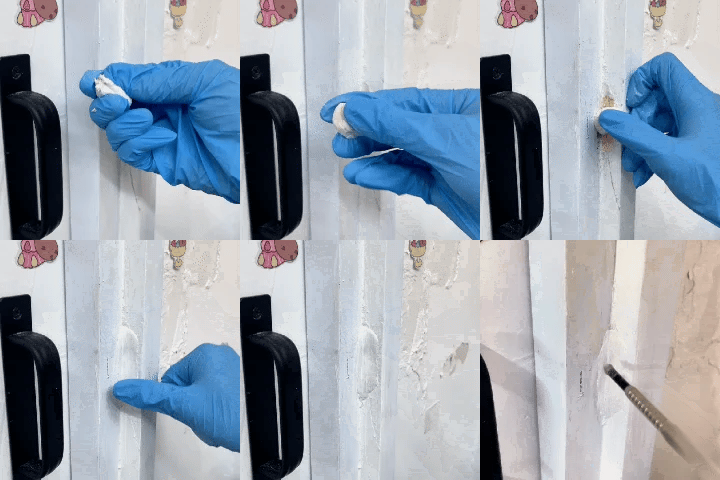

After it fully cures, the hardened patch is designed to resist water, making it suitable for small leaks, pipe joints, holes, and damp utility areas.
Apply to a clean, dry, and oil-free surface. Allow the repair to cure completely before exposing it to water.
Keep one practical repair material ready for common damage around the home, garage, workshop, and utility area.

Fill cracks, holes, and damaged joints.
Shape the putty around irregular fittings and gaps.
Rebuild chipped corners and broken edges.
Fill missing material on corners and damaged surfaces.
Once fully cured, the putty forms a hard patch designed to hold its shape and reinforce the damaged area instead of remaining soft or flexible.
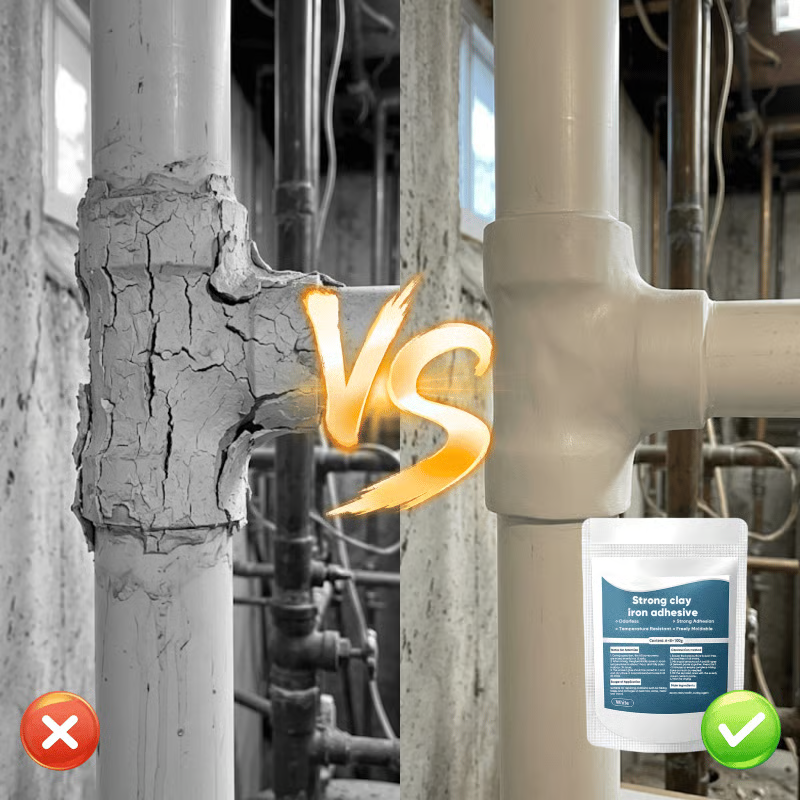
No special tools are required for normal application.

Remove loose material, dust, water, grease, and oil.
Take equal amounts of Part A and Part B.
Knead for 1–3 minutes, then press firmly into the damage.
Initial curing takes about 1 hour; full curing takes about 24 hours.
Tape and liquid glue can help with light surface jobs. Moldable repair putty is built for gaps, missing material, and uneven damage.
| Feature | Repair Putty | Tape / Basic Glue |
|---|---|---|
| Fills cracks and holes | ✓ Yes | Limited |
| Shapes around curves | ✓ Moldable | Difficult |
| Builds missing material | ✓ Yes | No |
| Water resistance | ✓ After full cure | Varies |
| Application | Mix, press, shape | Wrap or spread |
| Best use | Irregular damage | Light surface fixes |

It is intended for common repairs involving metal, PVC and other plastics, ceramic, tile, wood, and concrete. Clean and test the repair area first.
The cured patch is designed to resist water. Apply it to a clean, dry surface and wait until it has fully cured before exposing it to moisture.
Take equal amounts of Part A and Part B. Knead them together for 1–3 minutes until the mixture is consistent, then apply immediately.
Initial curing takes about 1 hour. Allow about 24 hours for a full cure before loading the repair or exposing it to water.
It is intended for small everyday repair jobs. Do not use it as a substitute for professional repair on gas lines, high-pressure systems, electrical hazards, structural components, or other safety-critical damage.
Keep a moldable repair option ready for the next crack, leak, hole, or broken edge.